
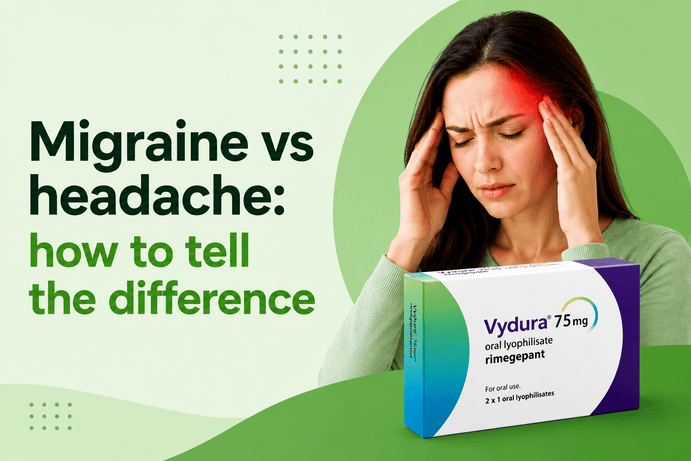
Migraine vs headache: how to tell the difference
June 17, 2026
Most people experience headaches from time to time, whether due to stress, dehydration, lack of sleep or illness. However, not every headache is the same. Migraines are a neurological condition that can cause much more severe symptoms and often require specific treatment.
Understanding the difference between a migraine and a common headache can help you identify the cause of your symptoms and seek appropriate treatment when needed.
In this guide, we explain how migraines differ from headaches, the symptoms to look out for, common triggers, and the treatment options available, including Vydura (rimegepant).
What is a headache?
A headache is pain or discomfort in the head, scalp or neck. It is one of the most common health complaints and can range from mild to severe.
Headaches can occur for many reasons, including:
- Stress and tension
- Dehydration
- Lack of sleep
- Eye strain
- Illness such as colds or flu
- Excessive alcohol consumption
Most headaches are temporary and improve with rest, hydration or over-the-counter pain relief.
What is a migraine?
A migraine is more than just a severe headache. It is a neurological condition that can cause intense head pain alongside a range of other symptoms.
Migraines often occur in episodes and may last from a few hours to several days. They can significantly affect daily activities, work and quality of life.
Common migraine symptoms include:
- Moderate to severe head pain
- Throbbing or pulsating pain
- Sensitivity to light and sound
- Nausea or vomiting
- Visual disturbances (known as aura)
- Difficulty concentrating
Not everyone experiences the same symptoms, and migraine attacks can vary in severity.
Key differences between migraines and headaches
Although migraines and headaches both involve head pain, there are some important differences.
| Headache | Migraine |
| Usually mild to moderate pain | Often moderate to severe pain |
| Pain may affect the whole head | Often affects one side of the head |
| Rarely causes nausea | May cause nausea and vomiting |
| Usually no sensitivity to light or sound | Commonly causes sensitivity to light and sound |
| Often improves with rest and hydration | May require specific migraine treatment |
| Typically shorter duration | Can last hours or even days |
One of the biggest differences is that migraines often involve symptoms beyond head pain, making them more disruptive to daily life.
Common symptoms to look out for
Symptoms more commonly linked to headaches:
- Dull or tight pain around the head
- Pressure around the forehead or temples
- Mild sensitivity to activity
Symptoms more commonly linked to migraines:
- Throbbing or pulsating pain
- Pain on one side of the head
- Nausea and vomiting
- Sensitivity to light, sound or smells
- Visual disturbances such as flashing lights or blind spots
- Fatigue before or after an attack
If your symptoms regularly include nausea or sensitivity to light, a migraine may be more likely than a standard headache.
Causes and triggers
Both headaches and migraines can be triggered by a variety of factors.
Common headache triggers:
- Stress
- Poor posture
- Dehydration
- Lack of sleep
- Skipping meals
Common migraine triggers:
- Hormonal changes
- Stress and anxiety
- Certain foods and drinks
- Changes in sleep patterns
- Bright lights or strong smells
- Weather changes
Keeping a symptom diary can help identify patterns and triggers that may contribute to migraine attacks.
Treatment options
Treatment depends on the type and severity of symptoms.
For occasional headaches, simple measures such as rest, hydration and over-the-counter pain relief may be sufficient.
For migraines, more targeted treatment may be needed, especially if attacks are frequent or severe.
Vydura (Rimegepant) for migraines
Vydura (rimegepant) is a prescription treatment used for migraine management.
It belongs to a class of medicines known as CGRP receptor antagonists. During a migraine attack, levels of a protein called CGRP increase, contributing to pain and other symptoms. Vydura works by blocking CGRP activity, helping to reduce migraine symptoms.
Potential benefits include:
- Targeted migraine relief
- Convenient oral treatment
- Suitable for certain patients who may not respond well to traditional migraine medications
Learn more about Vydura migraine treatment through Rapidmeds.
Other migraine treatments
Depending on your symptoms and medical history, treatment options may include:
- Pain relief medication
- Anti-sickness medication
- Preventive migraine treatments
- Lifestyle and trigger management
Explore the full range of migraine treatment options available through Rapidmeds.
When to seek medical help
You should seek medical advice if:
- Headaches become frequent or severe
- Symptoms are affecting your daily life
- Over-the-counter treatments are no longer effective
- You experience visual disturbances, nausea or neurological symptoms
- Your migraine attacks are becoming more frequent
A healthcare professional can help identify the cause of your symptoms and recommend the most appropriate treatment.
If you’re experiencing recurring migraines, you can explore migraine treatments or learn more about Vydura (rimegepant) through Rapidmeds.
Final thoughts
While all migraines are headaches, not all headaches are migraines. Understanding the differences can help you recognise your symptoms, avoid common triggers and access the right treatment.
If your symptoms are becoming more frequent or difficult to manage, professional advice can help you find effective relief. Treatments such as Vydura (rimegepant) may be an option for suitable patients looking for targeted migraine management.
FAQs
How do I know if I have a migraine or a headache?
Migraines often cause additional symptoms such as nausea, sensitivity to light and sound, and throbbing pain, whereas headaches are typically limited to head pain.
Can migraines last for several days?
Yes. Migraine attacks can last anywhere from a few hours to several days.
What triggers migraines?
Common triggers include stress, hormonal changes, lack of sleep, certain foods, bright lights and strong smells.
What is Vydura used for?
Vydura (rimegepant) is a prescription treatment used to help manage migraines.
When should I see a doctor about migraines?
You should seek medical advice if migraines are frequent, severe, affecting daily life, or not responding to standard treatments.