
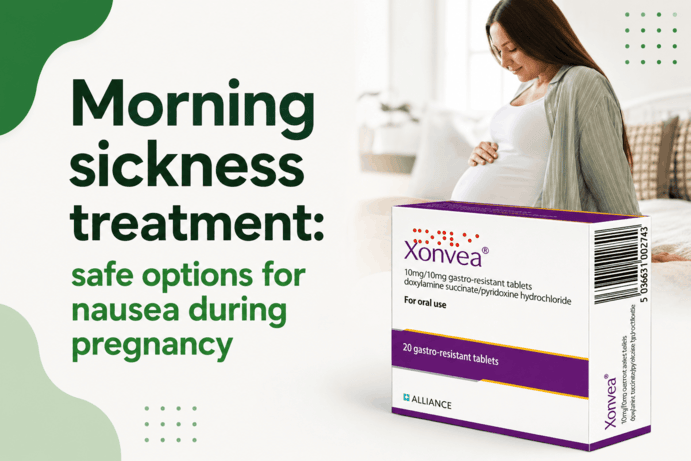
Morning sickness treatment: Safe options for nausea during pregnancy
May 26, 2026
Morning sickness is one of the most common symptoms experienced during pregnancy. While many women experience mild nausea during the first trimester, others may struggle with more severe symptoms that affect daily life, eating habits, and hydration.
Although symptoms are often referred to as “morning sickness”, nausea and vomiting can happen at any time of the day or night. In some cases, symptoms may become severe enough to require medical treatment.
This guide explains the causes of pregnancy sickness, when treatment may be needed, and the safe treatment options available in the UK, including Xonvea.
What is morning sickness?
Morning sickness refers to nausea and vomiting that occur during pregnancy. Symptoms can vary from mild nausea to excessive vomiting that interferes with normal activities.
Common symptoms include:
- Feeling nauseous throughout the day
- Vomiting during pregnancy
- Food aversions or sensitivity to smells
- Reduced appetite
- Fatigue linked to dehydration or poor nutrition
For some women, symptoms become more severe and may develop into hyperemesis gravidarum, a condition requiring medical support.
Causes of nausea during pregnancy
The exact cause of pregnancy sickness is not fully understood, but experts believe it is linked to several factors.
These may include:
- Hormonal surges during pregnancy
- Genetic factors
- First-time pregnancy
- Multiple pregnancy, such as twins or triplets
- Increased sensitivity to smells or certain foods
Hormonal changes in early pregnancy are thought to play a significant role in triggering nausea symptoms.
When does morning sickness start and end?
Morning sickness usually begins around week 4 of pregnancy and is most common during the first trimester.
For many women, symptoms improve or settle by around week 20, although some may continue to experience nausea later into pregnancy.
The severity of symptoms varies from person to person. While some women experience occasional nausea, others may struggle with persistent vomiting that affects everyday life.
When is treatment needed?
Mild pregnancy sickness can often be managed with lifestyle and dietary changes. However, treatment may be needed when symptoms become more severe or difficult to control.
You should consider seeking medical advice if:
- You cannot keep food or fluids down
- You feel dizzy or dehydrated
- Symptoms are affecting your daily activities
- You are losing weight during pregnancy
- Vomiting becomes frequent or uncontrollable
👉 Rapidmeds offers access to morning sickness treatment options through a convenient online consultation service.
Safe treatments for morning sickness
There are several approaches that may help reduce nausea during pregnancy, depending on symptom severity.
Xonvea for pregnancy sickness
Xonvea tablets are the only UK licensed treatment for pregnancy sickness and are recommended by the Royal College of Obstetricians and Gynecologists (RCOG).
Xonvea is specifically designed to help manage nausea and vomiting during pregnancy safely and effectively.
How Xonvea works
Xonvea contains two active ingredients that work together to reduce nausea symptoms:
- Doxylamine: an antihistamine that blocks histamine receptors in the brain linked to nausea
- Pyridoxine (Vitamin B6): which may help reduce pregnancy sickness symptoms
This dual-action treatment helps manage symptoms while supporting safer symptom control during pregnancy.
👉 Learn more about Xonvea treatment for pregnancy sickness through Rapidmeds.
Medications that may be prescribed
When lifestyle changes are not enough, healthcare professionals may recommend medication to help control symptoms.
Possible treatment options include:
- Xonvea
- Other anti-sickness medications where appropriate
- Hospital treatment in severe cases involving dehydration
Any medication during pregnancy should only be taken following medical advice and assessment.
Lifestyle and dietary tips
Alongside treatment, simple lifestyle changes may help improve symptoms.
Helpful tips include:
- Drinking fluids regularly to stay hydrated
- Eating smaller meals throughout the day
- Avoiding foods or smells that trigger nausea
- Choosing plain foods such as toast or crackers
- Getting enough rest
For some women, combining lifestyle adjustments with medical treatment provides the best symptom relief.
Severe pregnancy sickness (hyperemesis gravidarum)
Hyperemesis gravidarum is a more severe form of pregnancy sickness involving excessive nausea and vomiting.
Symptoms may include:
- Severe dehydration
- Weight loss
- Difficulty eating or drinking
- Extreme tiredness
- Needing hospital treatment
This condition should not be ignored, as severe dehydration and nutritional problems can affect overall wellbeing during pregnancy.
When to seek medical advice
You should seek medical advice if symptoms are becoming severe, persistent, or difficult to manage.
Speak to a healthcare professional if:
- You cannot keep fluids down
- You feel faint or dehydrated
- Vomiting becomes severe
- Symptoms are affecting your normal routine
👉 If you are struggling with pregnancy sickness, you can explore safe pregnancy sickness treatments or learn more about Xonvea tablets through Rapidmeds.
Final thoughts
Morning sickness is a common part of pregnancy, but severe or persistent symptoms should not be ignored.
While many women improve with dietary and lifestyle changes, others may benefit from medical support and treatment. Xonvea provides a UK licensed option for managing nausea and vomiting during pregnancy safely.
If symptoms are starting to affect your daily life, seeking professional advice can help you find the most appropriate treatment and support.
FAQs
What is the best treatment for morning sickness in the UK?
Xonvea is the only UK licensed treatment specifically approved for pregnancy sickness and is recommended by the RCOG.
When does morning sickness usually start?
Morning sickness commonly begins around week 4 of pregnancy.
How long does pregnancy sickness last?
For many women, symptoms improve by week 20, although some may continue to experience nausea later in pregnancy.
Is Xonvea safe during pregnancy?
Xonvea is licensed in the UK for treating pregnancy sickness and should be taken under medical guidance.
When should I seek help for pregnancy sickness?
You should seek medical advice if you cannot keep food or fluids down, feel dehydrated, or if symptoms are affecting daily life.