
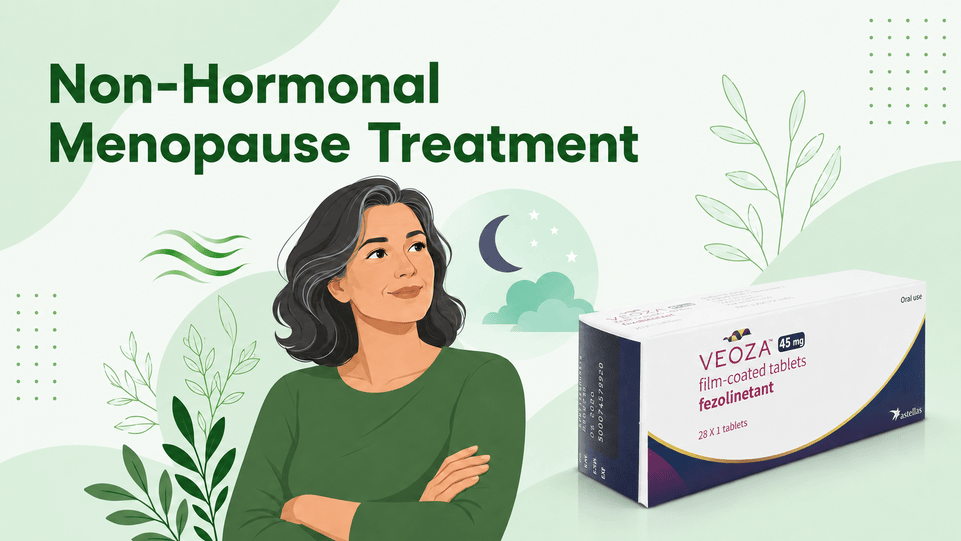
Non-Hormonal Menopause Treatment: Managing Hot Flushes and Night Sweats Without HRT
August 21, 2026
Hot flushes, night sweats and broken sleep can take over your days and nights, affecting everything from work and concentration to mood and overall wellbeing. Hormone replacement therapy (HRT) is an effective treatment for many women, but it may not be clinically suitable for everyone, and some people prefer not to take hormones.
If you have previously been advised against HRT, experienced unwanted side effects, or would simply prefer a hormone-free approach, your treatment options are no longer as limited as they once were. The UK now has a growing range of non-hormonal menopause treatments, including newer prescription medicines such as Veoza and Lynkuet, which work differently from HRT.
This guide explains the available non-HRT options, how these treatments work and what to consider when discussing them with a healthcare professional. It also looks more closely at Veoza (fezolinetant), a non-hormonal medicine used to treat moderate-to-severe hot flushes and night sweats associated with menopause.
What Is Non-Hormonal Menopause Treatment?
Non-hormonal menopause treatment refers to approaches that help manage symptoms without replacing hormones such as oestrogen or progesterone.
The most appropriate option depends on the symptoms being treated, their severity and the person’s medical history. Non-HRT options may include:
- Lifestyle and behavioural changes
- Cognitive behavioural therapy (CBT)
- Non-hormonal vaginal moisturisers and lubricants
- Certain prescription medicines
- Veoza (fezolinetant) for moderate-to-severe hot flushes and night sweats
Because different treatments target different symptoms, a clinical assessment is important before starting prescription medication.
Why Might Someone Consider an Alternative to HRT?
HRT can be an effective treatment for several menopause symptoms, but some women cannot or prefer not to use it.
A non-hormonal option may be considered when:
- HRT is not clinically suitable
- Hormonal treatment causes unwanted side effects
- There are concerns about using hormones
- The individual prefers a hormone-free treatment
- Hot flushes and night sweats remain particularly disruptive
Having a history of certain health conditions does not automatically mean that every non-hormonal medicine will be suitable. A clinician must assess medical history, current medicines and individual risk factors.
Which Menopause Symptoms Can Non-HRT Treatments Help?
Non-hormonal approaches may help manage symptoms such as:
- Hot flushes
- Night sweats
- Difficulty sleeping
- Low mood or anxiety
- Vaginal dryness
- Discomfort during sex
No single treatment manages every menopause symptom. For example, Veoza is designed to treat vasomotor symptoms—the medical term for hot flushes and night sweats—but it is not intended to treat vaginal dryness or protect bone health.
What Medication Helps Hot Flushes Without Hormones?
Several prescription medicines may be considered for menopausal hot flushes, depending on the person’s circumstances. These can include certain antidepressants, clonidine and other medicines used under clinical guidance.
Veoza is a newer non-hormonal prescription medicine developed specifically to reduce moderate-to-severe hot flushes and night sweats associated with menopause.
A clinician can explain which treatment may be appropriate based on symptom severity, medical history, possible side effects and other medicines being taken.
What Is Veoza?
Veoza is the brand name for fezolinetant. It is a non-hormonal prescription medicine used to treat moderate-to-severe vasomotor symptoms associated with menopause.
Vasomotor symptoms include:
- Hot flushes or hot flashes
- Night sweats
- Sudden changes in body temperature
Veoza does not contain oestrogen or progesterone and is not a form of HRT.
How Does Veoza Work?
During menopause, falling oestrogen levels can disrupt the brain’s temperature-control system. This can cause the body to react as though it is overheating, leading to hot flushes and night sweats.
Veoza blocks neurokinin B from acting at certain receptors involved in temperature regulation. This helps stabilise the body’s temperature-control centre and may reduce the frequency and severity of vasomotor symptoms.
Does Veoza Help With Night Sweats?
Yes. Veoza is licensed to treat moderate-to-severe vasomotor symptoms, which include both hot flushes and night sweats.
Reducing night sweats may also help some women experience fewer sleep disruptions. However, Veoza is not a general treatment for every cause of insomnia, and individual results can vary.
How Long Does Veoza Take to Work?
Some people may notice an improvement within the first few weeks of treatment, but the response can differ between individuals.
Veoza should be taken exactly as prescribed. If symptoms do not improve or side effects become troublesome, speak to the prescribing clinician. Do not change the dose or stop treatment without receiving medical advice.
Who May Be Suitable for Veoza?
Veoza may be considered for menopausal women experiencing moderate-to-severe hot flushes or night sweats, particularly when HRT is unsuitable or not preferred.
Before prescribing it, a clinician will need to consider:
- The type and severity of symptoms
- Liver health
- Kidney health
- Current and previous medical conditions
- Other prescription or non-prescription medicines
- Pregnancy or breastfeeding
- Previous hormone-sensitive health conditions
Suitability must always be assessed individually through a clinical consultation.
Why Are Liver Function Tests Needed With Veoza?
Veoza can affect liver function in some people. Blood tests are therefore required before treatment to check that the liver is working properly.
Further liver function tests are usually needed during the first few months of treatment, with additional monitoring where clinically required. Treatment should not be started or continued when test results indicate certain liver problems.
Seek urgent medical advice if symptoms that could suggest liver injury occur, including:
- Yellowing of the skin or eyes
- Dark urine
- Unusual tiredness
- Persistent nausea or vomiting
- Loss of appetite
- Itching
- Pale stools
- Pain in the upper abdomen
Your prescriber will explain the monitoring schedule and what to do if you experience concerning symptoms.
What Are the Possible Side Effects of Veoza?
Like all medicines, Veoza can cause side effects, although not everyone experiences them. Reported common side effects include:
- Diarrhoea
- Difficulty sleeping
- Abdominal pain
- Increased liver enzyme levels shown in blood tests
Serious liver problems may also occur, although their frequency cannot be reliably estimated from the available information. Read the patient information leaflet and contact a healthcare professional if you experience side effects or feel unwell.
Can Veoza Be Taken With Other Medicines?
Veoza can interact with certain medicines. Some treatments can increase the amount of fezolinetant in the blood and raise the risk of side effects.
Tell the prescribing clinician or pharmacist about everything you take, including:
- Prescription medicines
- Pharmacy or over-the-counter products
- Herbal remedies
- Vitamins and supplements
- Hormonal contraception
- HRT
Do not combine Veoza with HRT or start another medicine without checking with a healthcare professional.
Veoza vs HRT: What Is the Difference?
HRT replaces hormones that decline during menopause and can help with a broad range of symptoms. Depending on the treatment used, it may also provide benefits for bone health.
Veoza does not replace hormones. It acts on a pathway in the brain involved in regulating body temperature and is specifically intended to reduce hot flushes and night sweats.
The main differences include:
| Veoza | HRT |
| Non-hormonal medicine | Replaces hormones |
| Targets hot flushes and night sweats | May treat a wider range of menopause symptoms |
| Requires liver function monitoring | Monitoring depends on the type of HRT and individual risks |
| May be considered when HRT is unsuitable or not preferred | Commonly used when clinically appropriate |
Veoza and HRT have not been directly compared in every relevant patient group. The right treatment should therefore be selected through an individual clinical assessment.
How to get non-hormonal menopause treatment through RapidMeds
RapidMeds is a UK online pharmacy registered with the GPhC and regulated by the CQC, offering GP-led care for women managing menopause without hormones. Through our Menopause – Non-HRT Option service, you can access Veoza (fezolinetant) 45mg tablets in packs of 28 or 56, from £95.98.
The process is simple:
- Complete a confidential online consultation — reviewed by GMC-registered doctors who check your medical history, current medicines and suitability for treatment.
- Arrange liver function tests — required before starting Veoza and periodically during treatment, with regular GP reviews included. Home blood test kits with free GP result review are also available through RapidMeds.
- Receive discreet, fast delivery — your prescription is dispensed by our registered UK pharmacy and delivered to your door.
If Veoza isn’t right for you, our clinicians can discuss alternatives including HRT options such as Evorel patches, Oestrogel and oral progesterone for women who can take hormones, so you get the treatment that genuinely fits your circumstances rather than a one-size-fits-all answer.
Frequently Asked Questions
What is the best treatment for menopause without HRT?
There is no single best non-HRT treatment for everyone. The right option depends on the symptoms, their severity, medical history, and personal preferences. Veoza may be considered specifically for moderate-to-severe hot flushes and night sweats.
Is Veoza a type of HRT?
No. Veoza is a non-hormonal medicine and does not contain oestrogen or progesterone.
What symptoms does Veoza treat?
Veoza treats moderate-to-severe vasomotor symptoms associated with menopause. These symptoms are commonly known as hot flushes and night sweats.
Does Veoza treat all menopause symptoms?
No. Veoza is not intended to treat every menopause symptom. It does not directly treat vaginal dryness or provide the wider effects associated with replacing oestrogen.
Can I take Veoza if I cannot use HRT?
Veoza may be an option for some people who cannot or prefer not to use HRT. However, it has its own contraindications, interactions and monitoring requirements. A prescriber must assess whether it is safe and appropriate for you.
Can I take Veoza and HRT together?
Veoza should not be combined with HRT unless specifically advised by an appropriate specialist. Tell your prescriber about all hormonal and non-hormonal medicines you use.
Is Veoza available in the UK?
Yes. Veoza is a prescription-only medicine in the UK. It can only be supplied after a qualified prescriber confirms that it is clinically suitable.
Do I need blood tests while taking Veoza?
Yes. Liver function must be checked before treatment, and further blood tests are required during the early stages of treatment. Your clinician will explain the appropriate monitoring schedule.

Recent Posts
-
 Wegovy Tablets for Weight Loss: How They Work and What to Expect October 08, 2026
 -

-