

Description
Cytisine
If your doctor or GP has recommended Champix as a treatment to help you quit smoking, the information below explains how it works, who it is suitable for, and what to expect during treatment.
Cytisine is a naturally occurring, plant-based extract. It is a safe and effective treatment for people who want to stop smoking and does not contain nicotine.
How does Cytisine work?
Cytisine binds to the same receptors in the brain as nicotine from cigarettes, helping to reduce the urge to smoke. Because it does not contain nicotine, it supports smoking cessation without continued nicotine exposure.
Cytisine is taken as a weaning course of tablets, allowing for a gradual reduction in cravings. Studies have shown Cytisine to be more effective than nicotine patches.
Are there interactions with other medications?
Cytisine should not be prescribed to people receiving anti-tuberculosis (anti-TB) treatment.
Women of childbearing age who are taking oral contraceptives can use Cytisine; however, it is advised that a second barrier method of contraception (such as condoms) is used during treatment.
When is Cytisine not recommended?
Cytisine is not recommended for people:
- With kidney problems
- With liver problems
- Over 65 years of age
- Under 18 years of age
- With unstable angina
- With a recent heart attack or stroke
- With an irregular or abnormal heart rhythm
- Who are pregnant or breastfeeding
What are the side effects?
Cytisine is generally well tolerated. However, some people may experience side effects, most commonly related to the gastrointestinal system, including:
- Nausea (feeling sick)
- Vomiting (being sick)
- Abdominal distension (a swollen tummy)
- Sleep disturbances
Most side effects occur soon after starting treatment and usually settle as the course continues. In many cases, these symptoms may be related to nicotine withdrawal rather than the medication itself (for example, irritability, weight gain, or changes in appetite).
A full list of side effects can be found in the patient information leaflet provided with the medication.
How is Cytisine prescribed?
Cytisine is available as a 1.5 mg tablet, prescribed as a weaning course over 25 days. One pack contains 100 tablets, which is sufficient to complete the full course.
Smoking should be stopped no later than five days after starting treatment.
A dosing table can be used to help you keep track of the number of tablets to take each day.
Frequently Asked Questions
1. Can Cytisine be used with nicotine replacement therapy (NRT) or nicotine-containing vapes?
This is best avoided, as using Cytisine alongside nicotine products may increase the risk of side effects. However, nicotine products may be used during the first five days of treatment instead of smoking.
2. Does the quit date have to be on day five of the dosing schedule?
Yes. Quitting on later dates has not been fully researched. You should follow the guidance:
“Smoking should be stopped no later than the 5th day of treatment.”
By day five, urges to smoke and the rewarding effects of smoking will have significantly reduced.
3. What should patients do if they experience side effects?
If you have concerns about side effects, you should consult your stop smoking advisor or GP. If side effects are mild and tolerable, there is usually no reason to stop taking the medication, as most side effects improve or disappear over time.
Stopping smoking itself can cause withdrawal symptoms, some of which may overlap with medication side effects. Short-term discomfort often leads to long-term health benefits.
Any adverse effects that cause concern should be reported to your stop smoking advisor or GP so they can be reported to the MHRA via the Yellow Card Scheme.
4. Can I drive or operate machinery while taking Cytisine?
Yes. Cytisine does not affect your ability to drive or operate machinery.
5. Is it safe to buy Cytisine online?
Buying medicines online is often unwise due to concerns about quality control, lack of clinical supervision, inadequate patient information, and the risk of fraud or counterfeit products.
6. What happens if I miss a dose?
If you forget or are unable to take a dose of Cytisine, do not double the next dose. Simply continue taking the medication as prescribed.
Contact details
For non-emergency health advice, contact your GP or call NHS 111.
For emergencies, call 999.
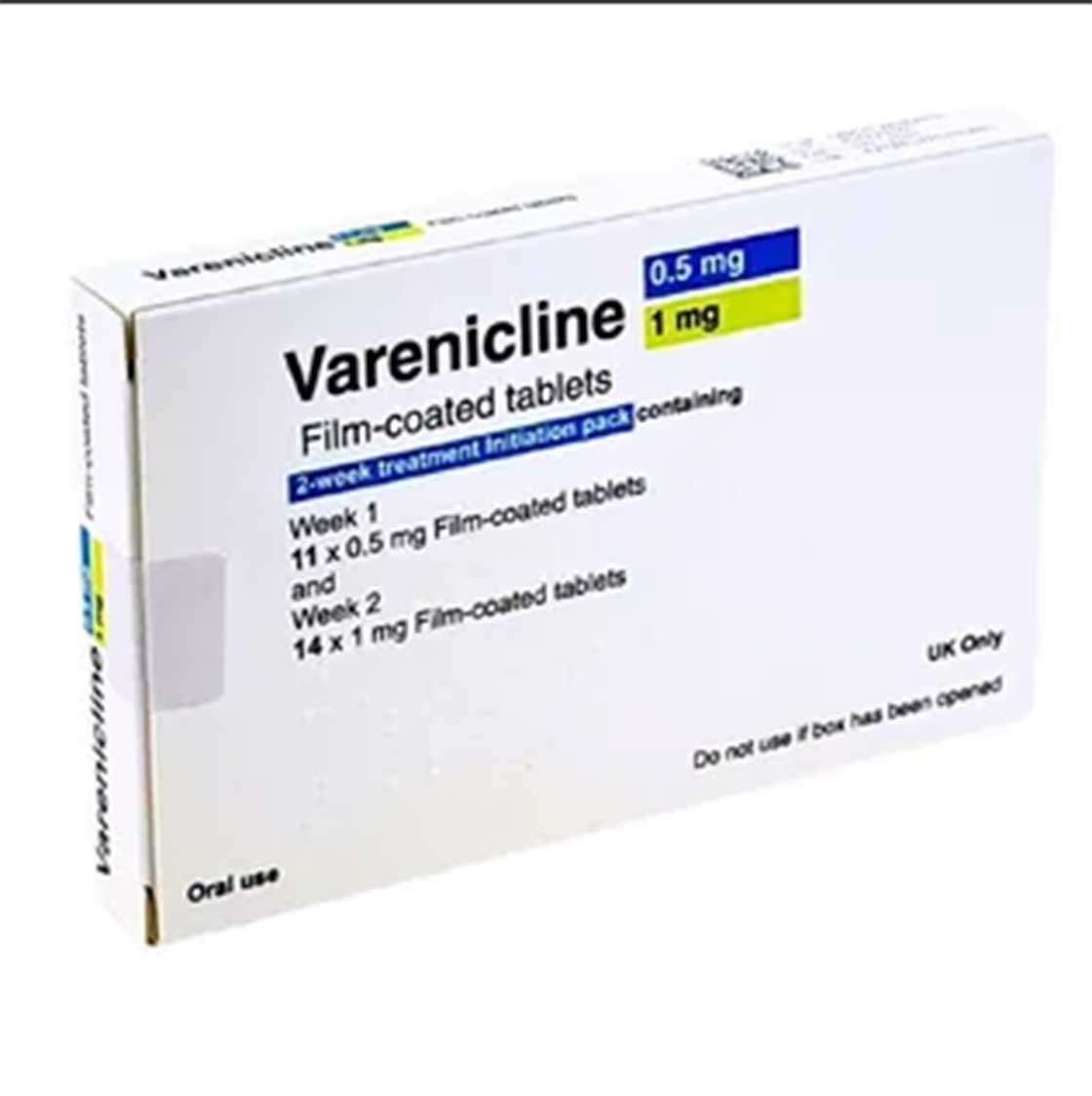
Varenicline
Varenicline is a partial nicotinic receptor agonist. It helps reduce cravings and withdrawal symptoms and decreases the rewarding effects of smoking by preventing nicotine from binding to receptors in the brain.
References: ABPI, 2021; MHRA CAS Alert, 2021
Dose and duration
- Varenicline should be started while the person is still smoking.
- Advise stopping smoking 7–14 days after starting treatment.
Recommended dosing schedule:
- Days 1–3: 500 micrograms once daily
- Days 4–7: 500 micrograms twice daily
- Day 8 onwards: 1 mg twice daily
For people who cannot tolerate the higher dose, the dose may be reduced to 500 micrograms twice daily.
Renal impairment:
- Severe renal impairment (creatinine clearance <30 mL/min):
- Days 1–3: 0.5 mg once daily
- Thereafter: 1 mg once daily
Treatment duration:
- Standard course: 12 weeks
- A further 12-week course may be considered for those who have successfully quit, to help maintain abstinence.
Varenicline can be stopped without tapering; however, up to 3% of people may experience increased irritability, urge to smoke, low mood, or insomnia after stopping. Dose tapering may be considered in these cases.
References: ABPI, 2021; BNF, 2023
Contraindications and cautions
Do not prescribe varenicline to people:
- Under 18 years of age
- With end-stage renal disease
Use with caution in people with:
- A history of cardiovascular disease
- A history of psychiatric illness
- Epilepsy or a predisposition to seizures
- Moderate renal impairment (CrCl 30–50 mL/min)
- Severe renal impairment (dose adjustment required)
Reviews
There are no reviews yet.