

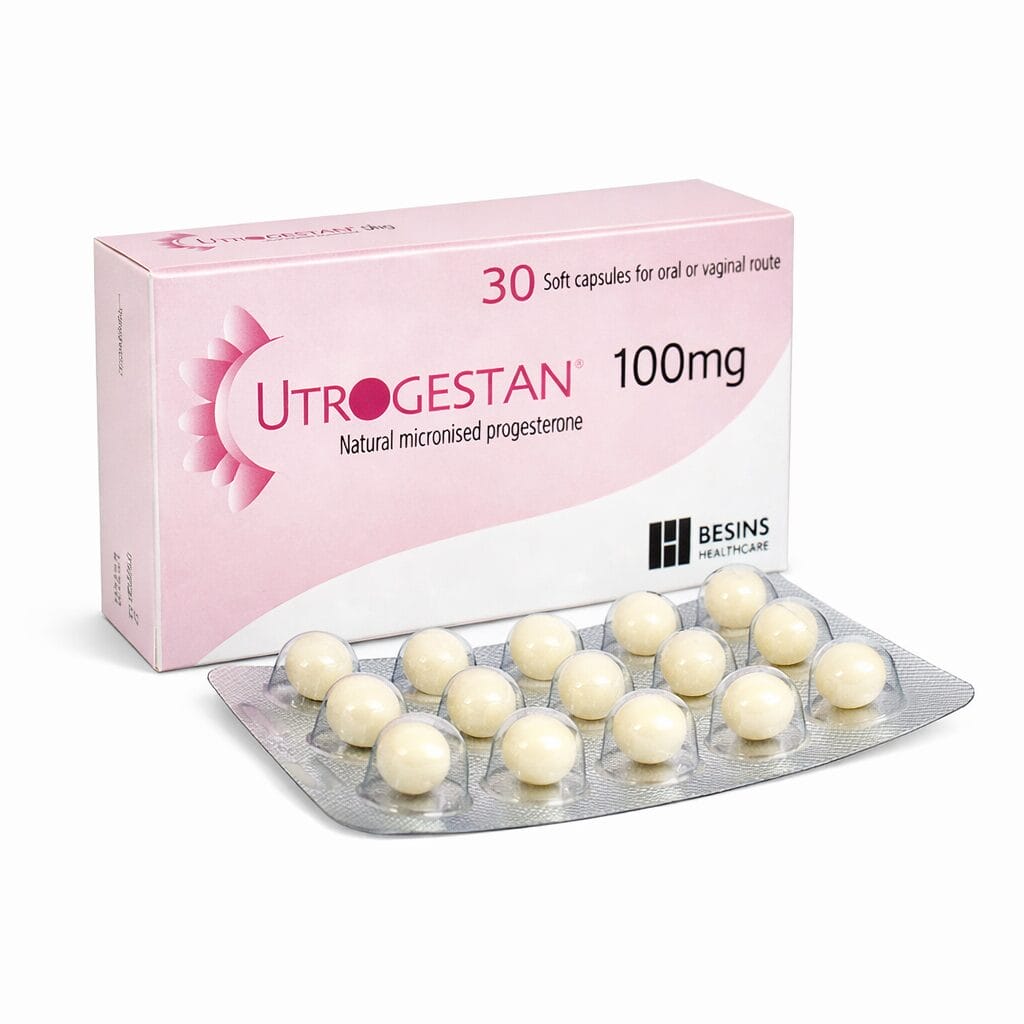
Description
Progesterone (Utrogestan) for Menopause: Uses, Benefits, Side Effects and Risks
Progesterone is a naturally occurring hormone that plays a vital role in regulating the menstrual cycle and maintaining the lining of the womb. During menopause, progesterone levels decline alongside oestrogen, which can contribute to a range of menopausal symptoms. Utrogestan, a form of micronised progesterone, is commonly prescribed as part of hormone replacement therapy (HRT) to help manage these symptoms safely.
What Is Utrogestan?
Utrogestan is a prescription medicine that contains micronised progesterone, which is chemically identical to the progesterone produced naturally by the body. It is often described as “body-identical progesterone” and is generally well tolerated. Utrogestan is usually taken as an oral capsule and is prescribed alongside oestrogen in women who still have a uterus.
How Progesterone Is Used in HRT
In hormone replacement therapy, progesterone is essential for women taking oestrogen who have not had a hysterectomy. Oestrogen alone can thicken the lining of the womb, increasing the risk of endometrial cancer. Progesterone helps prevent this by keeping the womb lining thin and stable.
Utrogestan may be prescribed as part of:
- Sequential (cyclical) HRT – progesterone is taken for part of each month, often causing a regular withdrawal bleed
- Continuous combined HRT – progesterone is taken daily alongside oestrogen, usually leading to no bleeding after the initial adjustment period
Benefits of Progesterone (Utrogestan) in Menopause
When used as part of HRT, progesterone offers several potential benefits:
- Protects the lining of the womb when taking oestrogen
- May improve sleep quality due to its natural calming effects
- Can help reduce anxiety and mood changes in some women
- Often causes fewer side effects than synthetic progestogens
Because Utrogestan is body-identical, many women find it easier to tolerate compared with older forms of progesterone.
Side Effects of Utrogestan
Like all medicines, Utrogestan can cause side effects, particularly during the first few months of treatment. Common side effects include:
- Drowsiness or dizziness
- Headache
- Breast tenderness
- Bloating or nausea
- Irregular or breakthrough bleeding
Taking Utrogestan at bedtime can help reduce daytime drowsiness.
Risks of Progesterone in HRT
Current evidence suggests that micronised progesterone does not increase breast cancer risk to the same extent as some synthetic progestogens when used as part of HRT. However, all HRT carries some risks, and treatment should be regularly reviewed by a healthcare professional to ensure the benefits continue to outweigh any potential risks.
Cautions When Using Utrogestan
Utrogestan should be used with caution in people with:
- A history of depression
- Liver problems
- Migraines
- Fluid retention or cardiovascular risk factors
Your prescriber may adjust the dose or treatment plan depending on your medical history.
Contraindications
Utrogestan is not suitable for everyone and should not be used if you have:
- Known or suspected breast cancer or progesterone-sensitive cancers
- Unexplained vaginal bleeding
- Severe liver disease
- A known allergy to progesterone or peanut products (Utrogestan capsules contain peanut oil)
- Current or previous blood clots, unless advised by a specialist
Progesterone (Utrogestan) and Menopause: Key Takeaway
Progesterone (Utrogestan) is an important part of hormone replacement therapy for many women during menopause. When prescribed appropriately and monitored regularly, it can help manage symptoms while protecting the womb lining and supporting overall wellbeing.
Always feel free to consult our qualified healthcare professionals before starting or changing HRT treatment.
Reviews
There are no reviews yet.