

Description
Estradiol (Vagifem): Hormone Replacement Therapy for Menopausal Symptoms
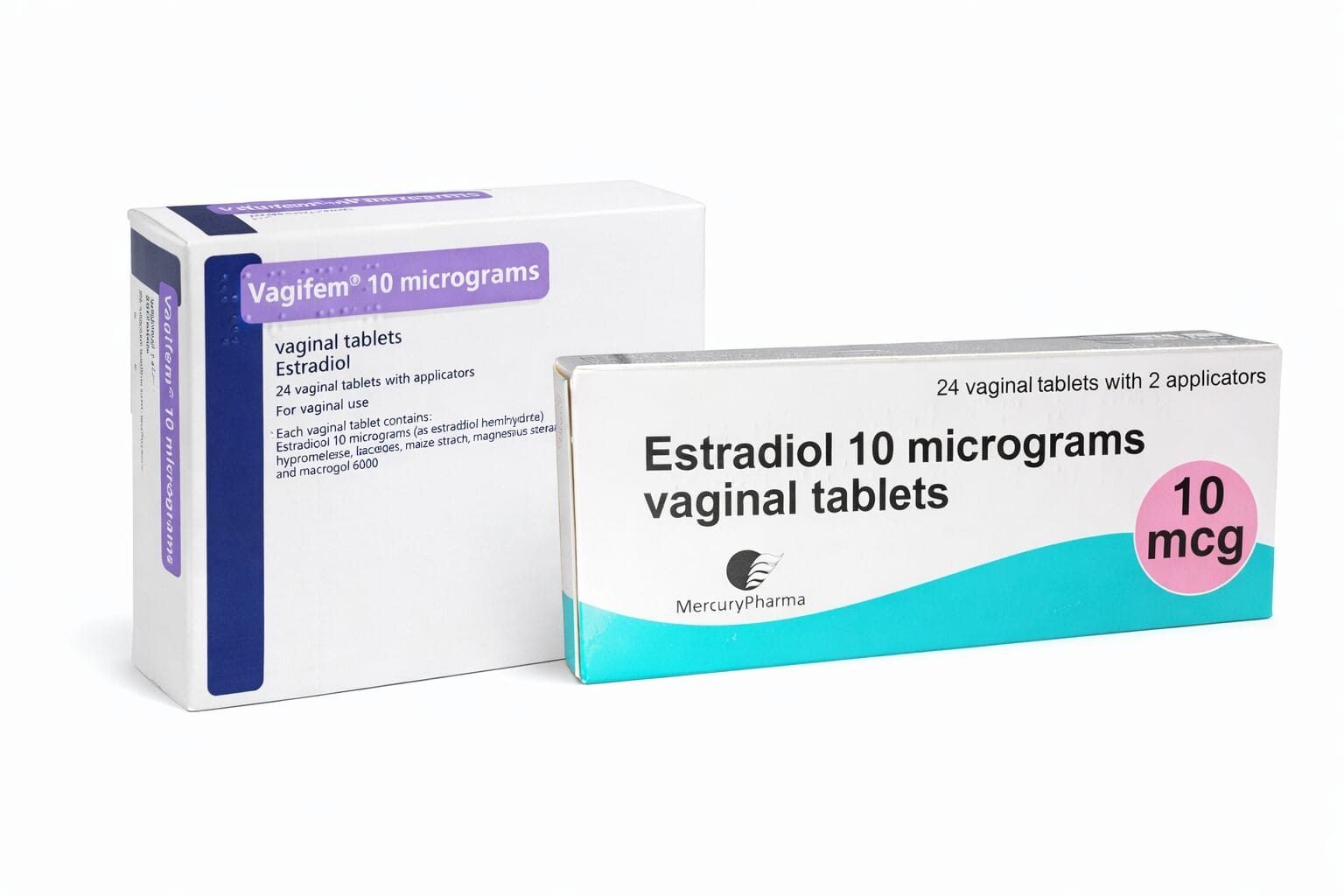
Estradiol (Vagifem®) is a locally administered form of oestrogen hormone replacement therapy (HRT) used to treat vaginal and urinary symptoms associated with menopause. It is commonly prescribed for women experiencing discomfort caused by declining oestrogen levels after menopause.
Unlike systemic HRT (such as tablets or patches), Vagifem delivers a low dose of estradiol directly to vaginal tissues, helping relieve symptoms with minimal absorption into the bloodstream.
What Is Estradiol (Vagifem)?
Estradiol, a form of oestrogen identical to the hormone naturally produced by the ovaries before menopause. It is supplied as a vaginal tablet that is inserted using an applicator, usually daily for an initial period and then reduced to a maintenance dose.
How Vagifem/Pessary Is Used in Menopause
During menopause, falling oestrogen levels can cause thinning, dryness, and inflammation of vaginal tissues — a condition known as vaginal atrophy or genitourinary syndrome of menopause (GSM).
Vagifem/Pessaries works by:
- Restoring oestrogen levels locally in vaginal tissue
- Improving tissue thickness and elasticity
- Increasing natural lubrication
This helps relieve uncomfortable menopausal symptoms without providing full-body hormone replacement.
Benefits of Estradiol (Vagifem)
Estradiol may help manage the following menopausal symptoms:
- Vaginal dryness
- Vaginal itching or burning
- Pain or discomfort during sex
- Recurrent urinary discomfort or irritation
- Increased vaginal fragility
Because Vagifem/pessary acts locally, it is often preferred for women who do not need systemic HRT or who cannot tolerate oral oestrogen.
Possible Side Effects
Most women tolerate Vagifem/pessaries well, especially due to its low-dose, localised action. However, side effects may include:
- Mild vaginal irritation or discharge
- Vaginal spotting or bleeding (usually early in treatment)
- Breast tenderness (uncommon)
- Headache or nausea (rare)
If unexpected vaginal bleeding occurs after long-term use, medical review is recommended.
Risks Associated With Vagifem/Pessaries
Vagifem is considered lower risk than systemic oestrogen therapies, but oestrogen use still carries some potential risks, including:
- Slight increased risk of blood clots or stroke (very low with vaginal use)
- Hormone-sensitive cancer risk (breast or endometrial), particularly in women with a history of these conditions
Current evidence suggests that low-dose vaginal estradiol does not significantly increase systemic risks, but individual risk factors should always be assessed.
Cautions and Contraindications
Vagifem may not be suitable for everyone. It should not be used in individuals with:
- Known or suspected oestrogen-dependent cancer
- Undiagnosed vaginal bleeding
- Active or past blood clots, stroke, or heart attack
- Severe liver disease
- Allergy to estradiol or any ingredient in Vagifem
Extra caution is advised for women with a history of breast cancer or those using other forms of HRT.
Using Vagifem/Pessaries Safely
- Use exactly as prescribed
- Attend regular health reviews if using long term
- Report any unusual bleeding, breast changes, or persistent side effects
Vagifem does not act as contraception and does not protect against sexually transmitted infections.
Summary
Estradiol (Vagifem) is an effective and well-tolerated treatment for vaginal menopausal symptoms, offering targeted relief with minimal systemic exposure. For many women, it provides a safer alternative to full hormone replacement therapy while significantly improving comfort and quality of life.
If you’re considering Vagifem, an online consultation through RapidMeds can help determine whether it’s the right option for your symptoms and medical history.
Reviews
There are no reviews yet.